Popsicle Stack
- 4.4
- Rating
- 10.00M
- Installs
- Free
- Price

 Analysis by App-foxy
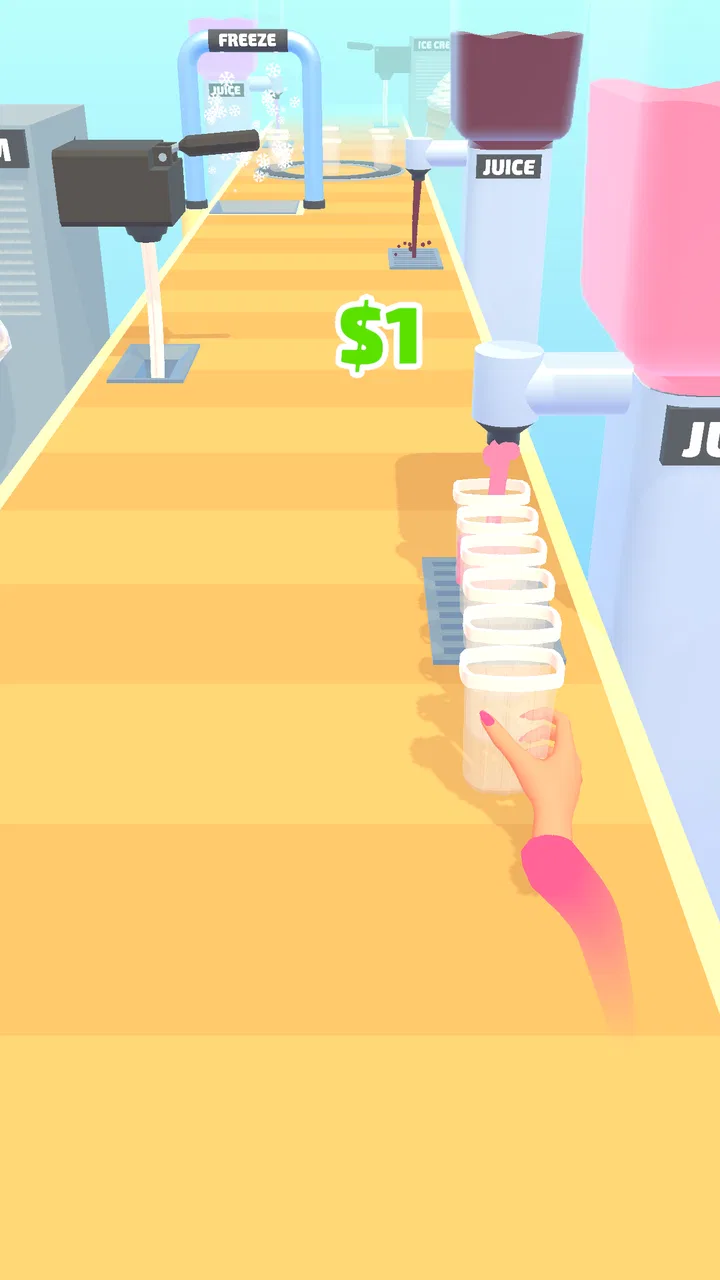
I spent time with Popsicle Stack as a quick arcade game, and my first impression was easy to understand: it is built around short, simple runs rather than a deep campaign or a complicated ruleset. The central appeal is immediate. You move through a level, build up a stack of popsicles, and try to finish with as much value as possible while avoiding the obstacles that interrupt your route. It is the kind of game I can open for a few minutes without needing to remember a story, manage a large inventory, or learn a long list of controls.
That simplicity is also the key to deciding whether it belongs on your phone. I would recommend it to someone who enjoys casual arcade games with clear visual feedback and a low barrier to entry. I would not choose it for a player looking for strategic depth, a substantial narrative, or a progression system that constantly changes the way the game is played. Its strongest quality is the immediacy of each attempt, while its main weakness is that the basic idea has to carry most of the experience.
How the first goals shape the experience
The early objective is obvious from the first moments: collect and preserve as many popsicles as possible while moving toward the end of the course. That gives every run a readable purpose. I never felt lost about what I was supposed to do, which matters in a game designed for quick sessions. The visual theme does much of the explaining, so the game can get started without a lengthy tutorial or a dense interface.
You May Also Like

 Blood Strike: 2.5 Anniversary
Blood Strike’s Loadouts Turn Every Drop Into a Tactical Gamble
A close look at Blood Strike’s custom loadouts: how fast access to signature weapons reshapes its battle royale rhythm, rewards preparation, and narrows the gap between fights.

 Pandora - Music & Podcasts
Pandora’s Music Is Easy to Start, but Harder to Recover
Pandora’s strength is its low-effort path from a seed to a station. Its weak spot is how much confidence it asks you to place in connection, setup, and quiet recovery.

 8 Ball Pool
 Is Built on Rivalries, Rematches, and Routine
A close look at the rivalries, rematches, shared routines, and unanswered safety questions that turn a quick pool match into a persistent mobile community.

 Samsung Music
’s Quiet Strength Is Playing What You Already Own
Its reach comes less from spectacle than from dependable access to a personal library. That simplicity is both the app’s strongest retention engine and its ceiling.

 AccuWeather: Weather Radar
AccuWeather Review: A Quick, Clear Forecast for Everyday Decisions
For everyday plans, the best forecast is the one you can understand quickly. AccuWeather makes rain timing, radar, and local conditions easy to act on, with a few trade-offs.

 Hill Climb Racing
Why Hill Climb Racing Still Turns Crashes Into One More Run
A tiny car, a bumpy hill and one more upgrade: Hill Climb Racing keeps resurfacing because its simple chaos makes every near-miss feel personal.
More From Our News Desk



In practice, I found the first attempts useful for learning the rhythm rather than chasing a perfect result. The route presents choices and hazards, and the player has to react quickly enough to keep the stack intact. Even when the action is simple, there is a small tension between taking a safer path and trying to leave the level with a larger collection. That tension is what turns a basic movement game into something more engaging than simply sliding from one end of the screen to the other.
The early goals also work because they are visible. A growing stack gives immediate confirmation that a decision was helpful, while losing part of it makes a mistake easy to understand. I prefer this kind of feedback to systems that hide progress behind several menus. Here, the result of an action is shown directly in the play area, so I can adjust my approach on the next run without studying a complicated results screen.
One practical tip is to treat the opening attempts as observation runs. Instead of rushing to collect everything, I pay attention to how the path is arranged and which sections demand more careful movement. This is especially useful when playing one-handed or while distracted, because the game is more forgiving when I already know where a sudden correction may be needed. The short format makes repeating a level feel natural rather than like a major setback.
The game comes from Lion Studios, a developer associated here with a casual arcade presentation rather than a large-scale console-style production. That distinction is important. I approached it expecting a focused mobile activity, and that is where it makes the most sense. It does not try to bury its main action under elaborate menus. For a player who wants to understand the goal within seconds, that is a genuine strength.
What progress feels like during ordinary play
Progress in Popsicle Stack is communicated mainly through the act of completing runs and seeing how well the stack survives. The satisfaction comes from improving my handling of the course: collecting more, avoiding avoidable losses, and reaching the finish with a better result. This is a modest form of progression, but it suits the compact design. I do not need to spend time arranging equipment or comparing a large collection of upgrades before playing again.
That simplicity can be helpful for younger players and for anyone who dislikes management-heavy mobile games. The age rating is Everyone, and the presentation is colorful and non-threatening. I can hand it to a child who understands basic touch controls without first explaining complicated objectives. At the same time, adults should be aware that an Everyone rating does not turn the game into a deep family activity; it mainly reflects the accessible tone and straightforward arcade structure.
The strongest progress signal is personal improvement. When I replay a section and make a cleaner choice, the result is immediately understandable. This makes the game suitable for small breaks during a commute, while waiting for an appointment, or between other tasks. A realistic use case is a five-minute pause during a workday: I can complete a few attempts, put the phone down, and return later without worrying about losing a long story sequence or forgetting a complex objective.
There is a trade-off here. Players who need a large number of clearly different goals may find the loop too narrow. The game’s appeal depends on whether collecting and protecting the stack remains satisfying after the novelty of the theme fades. I found that it works best when I set a small personal target, such as finishing a run more carefully than the previous one, instead of expecting the game to provide a completely new activity every few minutes.
The current version is 2.7.7, and the game requires Android 8.0 or later. For someone deciding whether an older Android phone can run it, the operating-system requirement is the practical point to check first. On a compatible device, the lightweight arcade format makes more sense than it would on a tablet or phone used primarily for long, demanding sessions. The game is designed around quick interaction, not around filling a large screen with detailed management panels.
Where the difficulty begins to matter
The difficulty curve is most effective when it asks me to be more attentive without changing the basic controls. Early play establishes the collection loop, while later sections put more pressure on timing and route selection. That gradual increase is important because the game would lose its purpose if every course felt identical. I enjoy the point at which I stop reacting randomly and start planning a movement because I know that a careless choice can reduce the final stack.
Still, this is not the sort of difficulty curve I would describe as highly strategic. The challenge is based on execution and awareness, not on building a long-term plan across several character classes or resource types. If you enjoy arcade games because they test quick decisions, that focus is welcome. If you prefer puzzles with multiple valid solutions or action games with advanced controls, the experience may feel limited.
My best advice is to avoid treating every collected popsicle as equally important. A larger stack is attractive, but a risky move can cost more than it gains. I get better results when I first protect the route I already have and only then consider whether an extra collection is worth the danger. That small change in mindset makes the runs feel less frantic and gives the game more tactical texture than its short description suggests.
Another useful habit is to make corrections early. Waiting until the stack is already close to a hazard usually leaves less room to recover. I found that gentle, deliberate movements are more reliable than constant last-second swipes. This is a simple observation, but it changes the feel of the game: instead of blaming the course after a poor result, I can identify whether I entered a section too quickly or committed to a route without enough space to adjust.
The game is also easier to enjoy when I accept that not every run has to be perfect. A failed attempt is not a reason to spend a long time rebuilding progress, because the core activity is designed for repetition. That makes the difficulty less punishing than in games where one mistake erases a lengthy investment. The downside is that players who want a dramatic sense of accomplishment may find the stakes too low.
How retention pressure affects the loop
The main retention pressure comes from the desire to improve the next run. I can see how a cleaner route or a larger surviving stack might encourage another attempt, especially when I was close to doing better. This is a familiar arcade structure, but it is effective because the feedback arrives quickly. I do not have to wait through a long loading sequence or complete a large mission before discovering whether my decisions worked.
At the same time, the loop does not automatically create endless interest. Once I understand the basic movement and have seen enough of the course structure, the motivation depends on my tolerance for repetition. That is where I think the game should be judged honestly. It is a good companion for short bursts, but I would not install it expecting a long-form hobby with layers of discovery.
There are in-app purchases ranging from $0.99 to $7.99 per item, while the game itself is free to download. I consider that a reasonable setup for trying the core experience without an upfront commitment, but I would still advise keeping an eye on purchase prompts, particularly if a child is using the device. The free entry makes experimentation easy, yet the presence of optional spending means it is worth checking the phone’s purchase controls before handing the game over.
The game has an average rating of 4.4 from around 178 thousand ratings, and it has passed 10 million installs. Those figures suggest that the straightforward arcade formula has reached a broad audience, but they do not change my personal conclusion: popularity is not a substitute for matching the right play style. Someone who likes quick collecting games will probably understand the appeal immediately. Someone who already feels tired of repeated obstacle courses may not find enough variation to stay interested.
Compared with more traditional arcade alternatives, Popsicle Stack is less about a high-score system that demands long-term mastery and more about a sequence of compact, visually clear challenges. Compared with idle or management games, it asks for active input rather than passive accumulation. Compared with endless runners, its course-based structure gives each attempt a more defined beginning and end. I prefer it to an endless runner when I want a quick sense of completion, but I would choose a deeper arcade title when I want advanced control or a more demanding skill ceiling.
Who should play it, and who should skip it
I think Popsicle Stack is a good fit for casual players who want immediate rules, colorful feedback, and a game that can be paused mentally as soon as a short break ends. It also suits families looking for an approachable arcade activity with an Everyone content rating. The controls and goals are easy to explain, and the visual idea gives the play a friendly identity instead of presenting an abstract series of obstacles.
I would be more cautious about recommending it to players who need a strong narrative, competitive multiplayer, complex character development, or a large collection of strategic systems. It is also not my first choice for someone who dislikes repeating similar actions to improve a result. The game’s charm is concentrated in its central loop, so the decision comes down to whether that loop feels relaxing and satisfying or too repetitive.
For a parent, the more important question is not whether a child can understand the game; most children who are comfortable with touch controls should grasp the basic idea quickly. The better question is whether the device is configured to prevent unwanted in-app purchases. Since the game is free but includes paid items, I would review those settings before letting a child play unsupervised.
For an adult using an older phone, the Android 8.0 minimum requirement is the first compatibility check. For an iOS player, the practical decision is less about the age rating and more about whether this particular short-session arcade loop is appealing. The game’s design does not require a long uninterrupted session, so it works best when installed as a small time-filler rather than as a primary gaming destination.
My verdict on the progression and pacing
After playing it with the right expectations, I see Popsicle Stack as a focused arcade game whose pacing is strongest at the beginning of a session. The early goal is clear, the progress is visible, and the increasing pressure gives each run a reason to continue. The game does not need a complicated unlock structure to make the first few attempts understandable; its immediate feedback does most of the work.
Its longer-term retention is more conditional. I kept returning when I wanted to improve a recent result or fill a short gap in the day, but I would not claim that the basic loop offers the depth of a more ambitious arcade game. That is not necessarily a flaw. A small game can be successful by doing one thing cleanly, and this one is at its best when used exactly that way.
My final recommendation is to try it if you want a free, accessible arcade experience built around collecting, protecting, and improving a stack during brief runs. The download has broad reach, with over 10 million installs, and the rating of 4.4 indicates that many players enjoy the formula. I would skip it if your priority is a rich progression system or a constantly expanding set of mechanics. The best reason to keep it installed is its quick, readable challenge—not the promise of a deep campaign.
In my experience, the game earns its place as a casual time-filler because it explains itself through play and makes small improvements feel worthwhile. I would recommend starting with a few relaxed runs, learning which movements preserve the stack, and deciding afterward whether the repetition feels satisfying. If it does, the free entry makes that experiment easy; if it does not, you will know quickly that a more varied arcade alternative is likely a better use of your time.
FAQs for Popsicle Stack
01What is the main objective of Popsicle Stack?
Popsicle Stack is a casual game where the primary goal is to build the tallest tower of popsicles by stacking them perfectly. Players must navigate through various levels, overcoming obstacles and challenges while maintaining balance to ensure their tower doesn't topple over. It’s a fun and engaging way to test precision and timing.
02Is Popsicle Stack free to play?
Yes, Popsicle Stack is free to download and play. However, it offers in-app purchases that can enhance the gaming experience. These purchases might include additional lives, power-ups, or cosmetic items that can help players progress faster or customize their gameplay.
03What are the system requirements for Popsicle Stack?
Popsicle Stack is compatible with both Android and iOS devices. For Android, it typically requires version 5.0 or higher, while iOS devices need to be running iOS 10.0 or later. It’s recommended to have a stable internet connection for seamless gameplay and updates.
04Does Popsicle Stack offer multiplayer options?
Currently, Popsicle Stack is primarily a single-player game focused on individual skill and progression. However, it may include leaderboards or social sharing features that allow players to compete indirectly by comparing scores with friends or a global player base.
05Are there any ads in Popsicle Stack?
Yes, Popsicle Stack includes ads, which is common in free-to-play games. These ads help support the developers and maintain the game’s free status. Players might have the option to remove ads through an in-app purchase for a smoother gaming experience.
Pros
- Intuitive controls for easy gameplay.
- Colorful and engaging graphics.
- Challenging levels keep it interesting.
- Free to download with optional purchases.
- Suitable for all ages.
Cons
- Contains ads that can be intrusive.
- Limited offline functionality.
- In-app purchases can be costly.
- Requires frequent updates.
- May consume significant battery.

Popsicle Stack
Gallery